

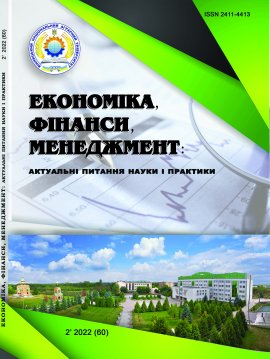
Issue №: 2 (60)
The journal deals with the issues of efficiency of functioning of the national economics and organizational forms of management of the national economy. Attention is paid to the problems of marketing, management and efficiency of production and economic activity of agrarian enterprises. The issues of public administration and administration, accounting and taxation, banking and insurance, forecasting and modeling of economic processes, foreign economic activity, commodity flows of economic entities and their infrastructure support.
WHAT MONEY WILL BECOME A MAINSTREAM CASH FLOW – ELECTRONIC OR VIRTUAL?
ZAKHARCHENKO Volodymyr – Doctor of Economic Sciences, Professor of the Department of Administrative Management and Alternative Energy Sources, Vinnytsia National Agrarian University (21008, Vinnytsia, 3, Soniachna Str., e-mail: zakharchenkovn@i.ua).
The article considers the current issues of monetary circulation in Ukraine and the world in the context of global challenges related to the world financial crisis of 2008-2009, the coronavirus pandemic and the Russian-Ukrainian war. The purpose of the study is a comparative analysis of electronic money, both fiat and virtual, as non-fiat, regarding the possibilities of their transformation into mainstream, that is, to occupy their dominant position in the money circulation systems of Ukraine and the world. It is noted that virtual money is often also called cryptocurrencies, because it is based on the blockchain technology, which provides a cryptographic system for protecting information. It is emphasized that their main technological feature is the decentralized nature of the crypto network. This means that they are not emitted or controlled by the state, and therefore cannot belong to fiat money (as opposed to electronic). Both advantages and disadvantages of virtual money compared to electronic ones have been identified. The presence of such shortcomings in cryptocurrencies, as a significant energy consumption of mining coins, high market volatility, the presence of «bad actors» in crypto networks and the displacement of national currencies, acutely raises questions about their regulation. It is proposed to distinguish between the five models of regulation of cryptocurrencies: repressive (with their complete prohibition); conservative (with the possibility of their purchase and sale in crypto exchangers); liberal (with permits for most operations with them); legal turnover; permitting (with recognition as a means of payment on par with the dollar and other reserve currencies). It is noted that despite the significant restrictions, especially according to the demands of repressive and conservative regulatory models, the cryptosector is rapidly developing both in the world and in Ukraine. As a positive moment in the development of the cryptosector in Ukraine, it is noted that it is already «working» in support of Ukraine in the war with the russian federation. It is concluded that the mainstream of cash flow should be electronic money. Virtual money should not bypass their share in cash and become another reserve currency. Otherwise, it will give cartblanche to transnational capital and undermine the basis of the current world system – the division of the world into separate states.
1. Yakovlev, A. (2019). Teoriya deneg i bitcoin [Theory of money and bitcoin]. Teoreticheckaya ekonomika – Theoretical economics, 7, 80-88 [in Russian].
2. Volosovych, S.V. (2016). Virtualna valiuta: hlobalizatsiini vyklyky ta perspektyvy rozvytku [Virtual currency: globalization challenges and development prospects]. Ekonomika Ukrainy – Economy of Ukraine, 4, 68-78 [in Ukrainian].
3. Hladkykh, D.M. (2019). Bankivska bezpeka derzhavy v umovakh rozvytku informatsiinoi ekonomiky (transformatsii bankivskykh operatsii) [Banking security of the state in the conditions of development of information economy (transformation of banking operations)]. Kyiv: NUOU [in Ukrainian].
4. Tesliuk, N.P., Zhulyn, O.V., Nazarenko, Ya.Ia., & Kuimova, A.V. (2021). Analiz rozvytku kryptovaliut na virtualnomu rynku finansovykh posluh [Analysis of cryptocurrency development in the virtual financial services market]. Efektyvna ekonomika – Efficient economy, 7. Retrieved from: http://www.economy.nayka.com.ua/?op=1&z=9052. DOI: 10.32702/2307-2105-2021.7.75 [in Ukrainian].
5. Tomchuk, O.V., & Fostolovych, V.A. (2018). Kryptovaliuta yak novyi finansovyi instrument: perevahy i nedoliky yii vykorystannia ta problemy normatyvno-pravovoho rehuliuvannia [Cryptocurrency as a new financial instrument: advantages and disadvantages of its use and problems of regulatory regulation]. Ekonomika, finansy, menedzhment: aktualni pytannia nauky i praktyky – Economy, finance, management: topical issues of science and practical activity, 2 (30), 67-77 [in Ukrainian].
6. Virtual currencies – key definitions and potential aml/cft risks. fatf-gafi.org. Retrieved from: http://www.fatf-gafi.org/media/fatf/documents/reports/Virtual-currency-key-definitio ns-and-potential-aml-cft-risks.pdf [in Ukrainian].
7. Blokchein. uk.wikipedia.org. Retrieved from: https://uk.wikipedia.org/wiki/%D0%91%D0%BB%D0%BE%D0%BA%D1%87%D0%B5%D0%B9%D0%BD [in Ukrainian]. 8. Ohliad tsyfrovykh kryptovaliut [Overview of digital cryptocurrencies]. bankchart.com.ua. Retrieved from: https://bankchart.com.ua/e_banking/ statti/oglyad_tsifrovih_kriptovalyut [in Ukrainian]. 9. Azbuka blockchain [ABC blockchain]. forknews. Retrieved from: https://forknews.io/blockchain/002117-azbuka-blockchain-.html [in Russian].
10. Chabanyuk, A. (2019). Bitkoin-maynery v 2018 godu ispol'zovali elektroenergii bolshe, chem Vengriya [Bitcoin miners used more electricity in 2018 than Hungary]. bitbetnews.com. Retrieved from: https://www.bitbetnews.com/novosti/bitkoin-majnery-v-2018-godu-ispolzovali-jelektrojenergii-bolshe-chem-vengrija.html [in Russian].
11. Prohramist zberihav bitkoiny na $240 mln. A potim zabuv parol do nykh [The programmer saved bitcoins for $240 million and then forgot the password to the]. bbc.com. Retrieved from: https://www.bbc.com/ukrainian/news-55650458 [in Ukrainian].
12. Top-10 kriptovalyut na 12.04.2022 [Top 10 cryptocurrencies as of April 12, 2022]. ixbt.com. Retrieved from: https://www.ixbt.com/live/crypto/top-10-kriptovalyut-na-12-aprelya-2022.html [in Russian].
13. Demyanenko, V., & Kuvshinova, O. (2022). Regulirovanie kriptovalyuty: mirovoj opyt [Cryptocurrency regulation: world experience]. econs.online. Retrieved from: https://econs.online/articles/techno/regulirovanie-kriptovalyuty-mirovoy-opyt/ [in Russian].
14. Rynok kryptovaliuty: yak v krainakh svitu rehuliuiut virtualni aktyvy [Cryptocurrency market: how virtual assets are regulated in the countries of the world]. slovoidilo.ua. Retrieved from: https://www.slovoidilo.ua/2021/ 09/09/infografika/finansy/rynok-kryptovalyuty-yak-krayinax-svitu-rehulyuyut-virtualni-aktyvy [in Ukrainian].
15. Samsung zapuskaet finansovuyu blokchejn-platformu [Samsung launches financial blockchain platform]. forknews. Retrieved from: https://forknews.io/blockchain/001410-samsung-zapuskaet-finanso.html [in Russian].
16. Volatylnist kryptovaliut [Cryptocurrency Volatility]. exbase.io. Retrieved from: https://exbase.io/uk/wiki/volatilnist-kriptovalyut [in Ukrainian].
17. Holovnov, S. (2022). Choho chekaty vid lehalizatsii kryptoindustrii v Ukraini [What to expect from the legalization of the crypto industry in Ukraine]. biznes-tsenzor. Retrieved from: https://biz.censor.net/r3315058 [in Ukrainian].
18. Lobanova, E. V. (2022). Ukraine nabirayut populyarnost novye dengi: v chem hranit svoi sberezheniya [New money is gaining popularity in Ukraine: what to keep your savings in]. biz.today.ua. Retrieved from: https://biz.today.ua/ru/v-ukrayne-nabyrayut-populyarnost-novye-dengy-kakuyu-zamenu-nashly-gryvne/?utm_ medium=referral&utm_source=idealmedia&utm_campaign=today.ua&utm_term=1295725s2090238455&utm_content=9963950/ [in Russian].
19. Pro virtualni aktyvy: Zakon Ukrainy № 2074-IX [Law of Ukraine «About virtual assets» № 2074-IX]. (2022, February 17). zakon.rada.gov.ua. Retrieved from: https://zakon.rada.gov.ua/laws/show/2074-20#Text [in Ukrainian].
20. Mintsyfry pryimaie kryptovaliutu dlia dopomohy Ukraini [The Ministry of Digital accepts cryptocurrency to help Ukraine]. minfin.com.ua. Retrieved from: https://minfin.com.ua/ua/2022/03/15/82163351/ [in Ukrainian].
21. Soosnovatel Apple nazval bіtkoіn «cifrovym zolotom». [Apple’s co-founder called bіtkoіn «digital gold»]. business.com. Retrieved from: http://ru.businessua.com/finance/16622.html [in Russian].
22. Barria, S. (2021). Bytva za bitkoin. Khto ye khto u svitovomu protystoianni cherez kryptovaliuty [Battle for bitcoin. Who is who in the global confrontation over cryptocurrencies]. bbc.com. Retrieved from: https://www.bbc.com/ukrainian/features-57526593 [in Ukrainian].
23. Vladelcam bitkoinov veleli prigotovitsya k potere vseh deneg [Bitcoin owners were told to prepare for the loss of all money]. banki.ru. Retrieved from: https://www.banki.ru/news/lenta/?id=10221031 [in Russian].
24. Asmakov, A. (2017). Ekonomist Dzhozef Stiglic: u bitkoina net socialno poleznyh funkcij [Economist Joseph Stiglitz: bitcoin has no socially useful functions]. forklog.com. Retrieved from: https://forklog.com/ekonomist-dzhozef-stiglits-u-bitkoina-net-sotsialno-poleznyh-funktsij [in Russian].
25. Irtlach, K. (2019). V hode Vsemirnogo ekonomicheskogo foruma v Davose eksperty sdelali ryad neuteshitelnyh zayavlenij kasatelno budushego bitkoina [During the World Economic Forum in Davos, experts made a number of disappointing statements about the future of bitcoin]. itc.ua. Retrieved from: https://itc.ua/blogs/v-hode-vsemirnogo-ekonomicheskogo-foruma-v-davose-ekspertyi-sdelali-ryad-neuteshi telnyih-zayavleniy-kasatelno-budushhego-bitkoina/ [in Russian].
26. Zakharchenko, V.I. (2022). Na shliakhu do tsyfrovoho standartu svitovoi valiutnoi systemy [On the way to the digital standard of the world currency system]. Ekonomichnyi forum – Economic Forum, 1, 90-99. DOI: https://doi.org/10.36910/6775-2308-8559-2022-1-11 [in Ukrainian].
About the journal
С1 Economics and International Economic Relations (by specialization)
D1 Accounting and Taxation
D2 Finance, Banking, Insurance and Stock Market
D3 Management
D4 Public Management and Administration
D5 Marketing
D7 Trade
J3 Tourism and Recreation
Founded in 1997 under the name ”Bulletin of Vinnytsia State Agricultural Institute”. In 2010-2014 it was published under the name “Collection of Scientific Papers of Vinnytsia National Agrarian University”. Since 2015 “Economics, finance, management: current issues of science and practical activity” (Certificate of State Registration of Mass Media No. 21154-10954 PR dated 12/31/2014).
